
How Automated Payroll Reduces Risk and Boosts Efficiency for Growing Businesses
June 10th, 2025
5 min read

Payroll is one of the most important — and most complex — responsibilities a business manages. Between tax filings, wage calculations, compliance updates, and employee payments, even a small mistake can lead to penalties, frustrated employees, or operational disruption. For many growing companies, manual payroll processes quickly become inefficient and risky.
At Lift HCM, we work with businesses every day that are navigating these challenges. Many organizations start with spreadsheets or basic payroll tools, only to realize later that manual processes increase compliance exposure and drain valuable time from HR and finance teams.
In this article, we’ll explain how automated payroll works, why it reduces compliance risk, and how it improves operational efficiency for businesses of all sizes. By the end, you’ll understand how payroll automation helps companies simplify payroll management while improving accuracy and scalability.
What Is Automated Payroll?
Automated payroll refers to payroll systems that automatically calculate wages, taxes, deductions, and payments using integrated software rather than manual spreadsheets or calculations.
Instead of manually entering payroll data and performing calculations, automated payroll systems handle the process using predefined rules and real-time compliance updates.
Most modern payroll automation platforms include:
- Automated wage calculations
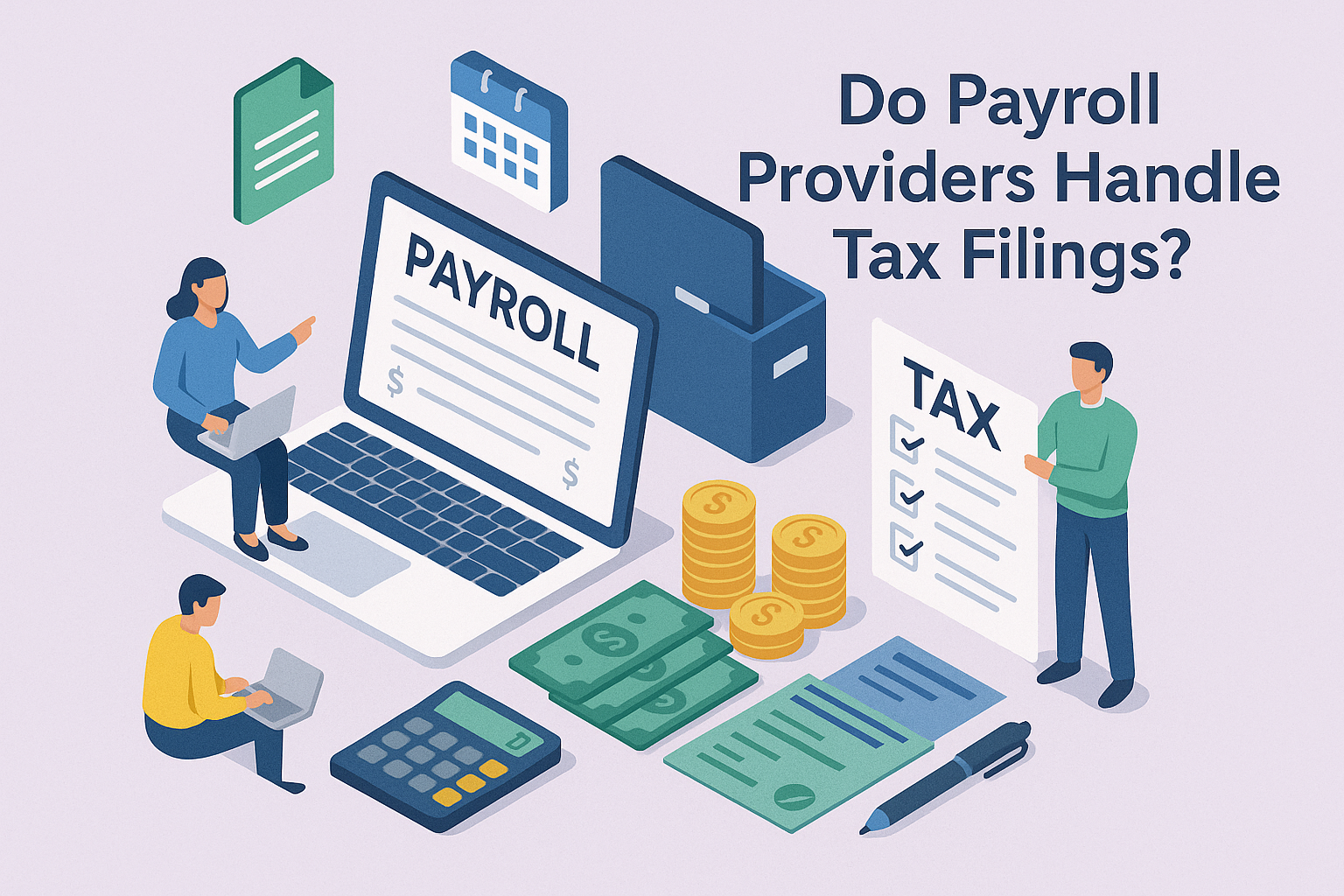
- Tax withholding and filing
- Direct deposit payments
- Time and attendance integration
- Compliance monitoring
- Reporting dashboards
Automation transforms payroll from a time-consuming administrative task into a streamlined operational workflow.
The Risks of Doing Payroll Manually
Spreadsheets might work when your team is small, but growth brings more moving parts. Manual payroll creates serious risks that can drag down your business.
Here’s what you’re up against:
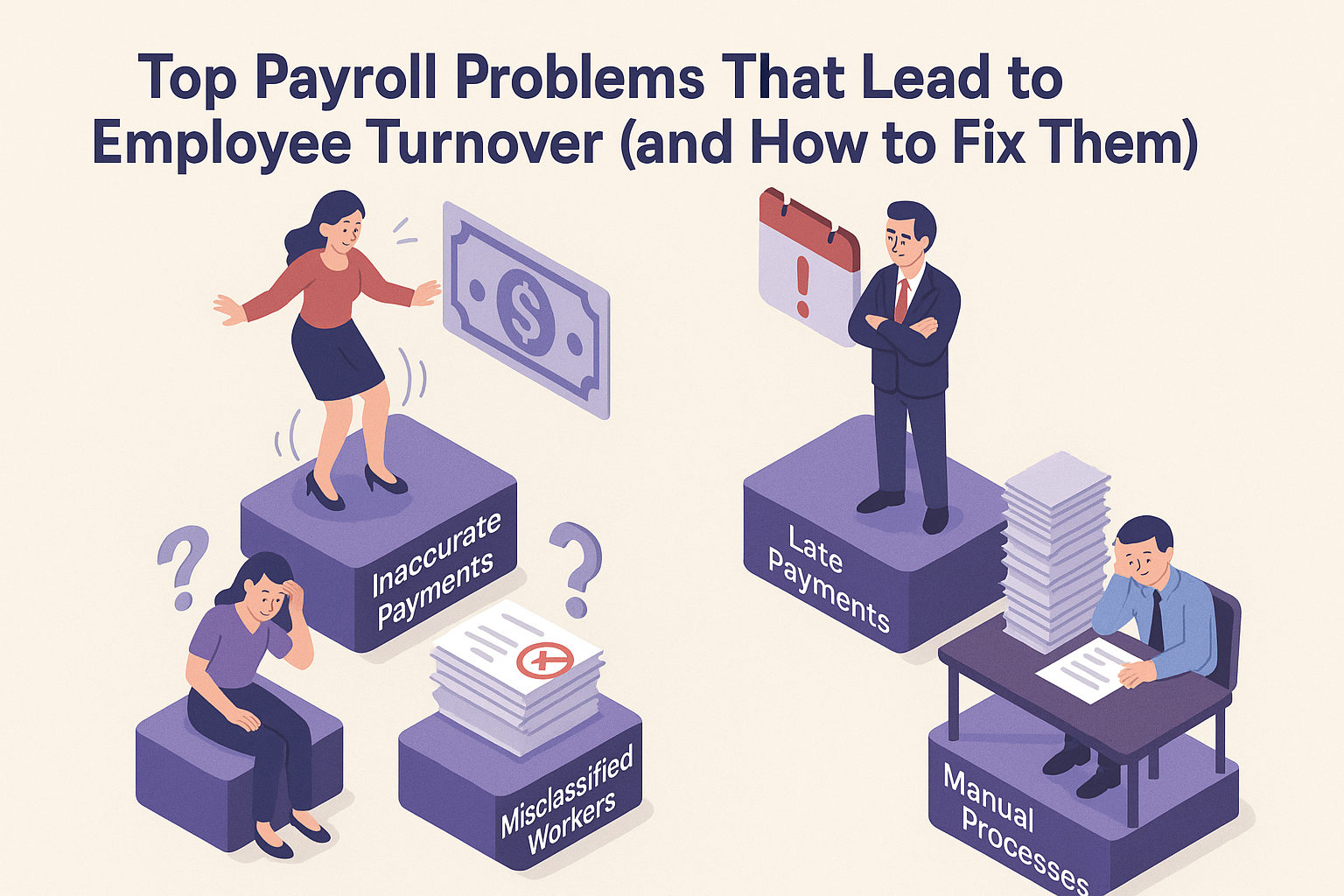
Costly Errors: Missed hours, outdated tax rates, and manual miscalculations can lead to overpaying employees, underpaying taxes, or getting penalties. Even minor mistakes can have major consequences.
Compliance Risks: Tax regulations shift constantly. One missed update or late filing could mean fines, audits, or even legal issues.
Security Gaps: Sharing payroll data through email or spreadsheets puts sensitive information at risk. Without strong safeguards, your business is vulnerable to breaches and internal misuse.
Bottlenecks and Burnout: HR teams can spend hours fixing payroll mistakes and chasing approvals. That’s time that could be spent on strategy and employee experience.
Employee Frustration: Late or incorrect paychecks erode trust. If payroll mistakes happen too often, top performers could start looking elsewhere.
Inflexible Processes: A system that works for five employees won’t work for a team of 50. Manual workflows can’t keep up with your business’s pace.
Why Automate Your Payroll?
Automation is a growth enabler. When you switch to an automated payroll platform, you can connect your payroll, HR, time tracking, and benefits all into one streamlined system.
Instead of re-keying hours into payroll, time tracking flows directly into the system. This can drastically cut down on errors and eliminate countless hours of work. Real-time dashboards give you instant visibility into payroll status and alerts that can help you make faster, smarter decisions.
Built-in compliance features help you stay current with changing laws, and enterprise-grade security protects your data with encrypted storage and role-based access.
The Lift HCM Advantage
Not all payroll platforms are created equal. Lift HCM combines powerful technology with real people who care about your business.
Here’s what makes us different:
- Cloud-Native Platform: Powered by iSolved, our system is fast, secure, and built for today’s mobile, remote, and hybrid workforces.
- Dedicated Support: Talk to real experts who know your business, not a call center.
- Industry Expertise: From hospitality to healthcare, we tailor solutions to your specific needs and regulatory requirements.
- Built for Growth: Our platform grows with you. Whether you’re hiring in new states or expanding locations, its infrastructure can adapt to support your needs.
5 Ways Automated Payroll Improves Business Efficiency
Payroll automation doesn’t only reduce risk — it also improves operational efficiency across HR and finance teams.
1. Reduces payroll processing time
Manual payroll can take hours each pay period. Automation dramatically reduces processing time by performing calculations instantly.
Some organizations report payroll processing time reductions of up to 70% after adopting automated systems.
2. Improves payroll accuracy
Automated systems apply consistent rules across all employees, reducing calculation errors.
Many modern payroll platforms achieve accuracy rates above 99% when payroll data is integrated correctly.
3. Integrates workforce data
Automated payroll systems often integrate with:
- HR platforms
- time and attendance systems
- benefits administration
- workforce scheduling tools
This integration eliminates duplicate data entry and reduces administrative overhead.
4. Provides real-time reporting
Automation enables payroll teams to generate reports instantly, including:
- labor cost reporting
- tax liabilities
- payroll summaries
- compliance documentation
This visibility supports better financial planning and workforce management.
Scales with business growth
As companies grow, payroll complexity increases.
Automation helps businesses manage:
- multi-state employees
- benefits deductions
- varying pay structures
- compliance across jurisdictions
Without automation, payroll complexity increases exponentially as headcount grows.
Manual Payroll vs Automated Payroll
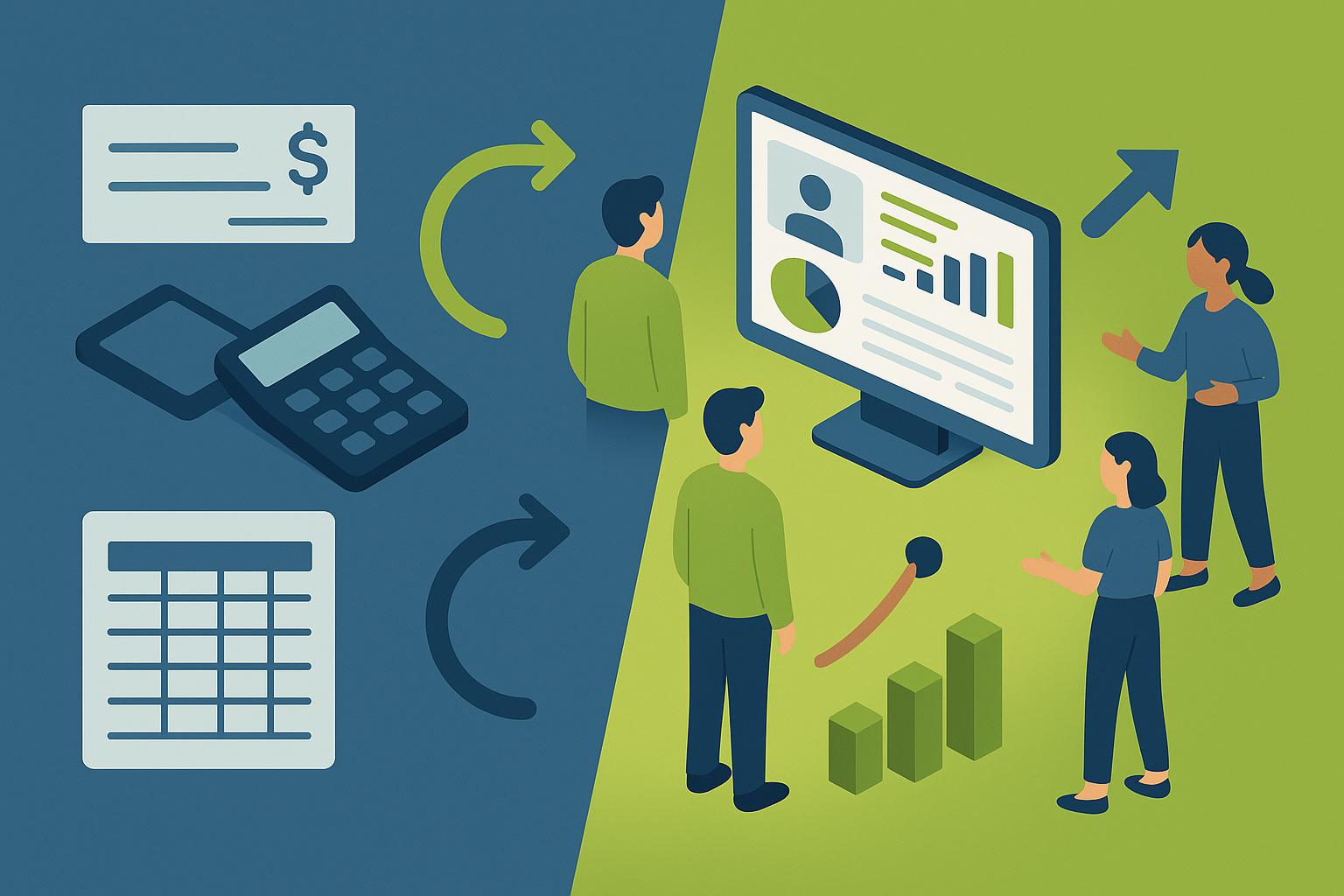
The differences between manual and automated payroll become clear when comparing efficiency, accuracy, and scalability.
| Payroll Feature | Manual Payroll | Automated Payroll |
|---|---|---|
| Payroll calculations | Manual entry and formulas | Automatic calculations |
| Tax compliance | Requires manual updates | Automatic updates |
| Processing time | Hours per payroll cycle | Minutes per cycle |
| Error risk | Higher risk of mistakes | Significantly reduced |
| Reporting | Manual reports | Real-time dashboards |
| Scalability | Difficult as company grows | Easily scales with growth |
For growing businesses, payroll automation quickly becomes essential to maintain operational efficiency.
When Should a Business Automate Payroll?
Many organizations delay payroll automation until manual processes begin causing problems.
However, several indicators suggest it may be time to automate payroll.
Signs a company should automate payroll
- Payroll processing takes several hours each pay period
- Payroll errors occur frequently
- Compliance requirements are becoming difficult to track
- The company has employees in multiple states
- Workforce size is increasing
Automation becomes especially valuable for businesses experiencing growth or operational complexity.
Frequently Asked Questions About Automated Payroll
Q: What is automated payroll?
Automated payroll is a payroll system that automatically calculates wages, taxes, deductions, and payments using payroll software rather than manual calculations.
Q: Does automated payroll reduce compliance risk?
Yes. Automated payroll systems apply current tax rules and regulatory updates automatically, reducing the likelihood of compliance errors.
Q: How much time does payroll automation save?
Industry estimates suggest payroll automation can reduce payroll processing time by up to 70%, depending on system integration and workforce size.
Q: Is automated payroll worth it for small businesses?
Yes. Even small businesses benefit from automation by reducing payroll errors, saving administrative time, and simplifying compliance management.
Q: Can automated payroll integrate with HR systems?
Most modern payroll platforms integrate with HR systems, time tracking tools, benefits administration, and workforce management software.
What the Transition Looks Like
We make switching simple and low stress. While we tailor every implementation to each business, most transitions follow these steps:
Step 1: Discovery and Planning
We assess your current payroll process and identify pain points and improvement opportunities.
Step 2: System Setup
Our team configures your platform to match your pay rules, schedules, and reporting needs.
Step 3: Secure Data Migration
We safely transfer your employee and payroll data with accuracy checks along the way.
Step 4: Testing and Training
You’ll run a test payroll while your team gets hands-on training with the new system.
Step 5: Go-Live with Support
We’re with you at every step of the launch to ensure a seamless rollout.
And we don’t stop there. Post-launch, we continue to support your success with regular check-ins and optimization strategies as your business evolves.
Stop letting manual payroll slow you down. With Lift HCM, you’ll save time, reduce risk, and keep your team moving forward.
Call (630) 366-2600 to speak with a Lift HCM expert or get your free quote here!
Better Payroll Starts with Lift HCM
There's more to your payroll than numbers. It's about your people, performance, and potential. At Lift HCM, we help businesses like yours move beyond the limits of manual processes and toward smarter, scalable solutions. Whether you're in hospitality, healthcare, or professional services, we’ll meet you where you are and grow with you.
Let’s simplify your payroll. Let’s lift your business together. Learn more about us here.
Caitlin Kapolas is a content creator and marketing professional at Lift HCM, specializing in educational content for business owners, HR leaders, and payroll professionals. She writes about payroll, HR administration, compliance, workforce management, benefits, recruiting, and human capital management technology. Drawing from her background in account management and client experience, Caitlin focuses on creating clear, helpful resources that answer real employer questions and support more informed decision-making.




.png?width=1536&height=1024&name=Create%20a%20background%20that%20reads%2c%20How%20Long%20to%20Keep%20P%20(1).png)