
As an HR professional or business owner, you need employees to understand the policies, procedures, and expectations that apply at work. When that information is scattered across emails, documents, and verbal instructions, employees may not know where to look when they have a question.An employee handbook puts important workplace information in one accessible place. However, deciding what belongs in the handbook, what should stay out, and how detailed each policy should be can quickly become overwhelming.
At Lift HCM, we help organizations make HR information easier for employees and managers to understand and use. In this guide, you will learn what an employee handbook should include, which mistakes to avoid, and how to keep your handbook current.
Download Lift HCM's free Employee Handbook Template to get started.
Table of Contents
- What Should an Employee Handbook Include?
- What Should Be Avoided in an Employee Handbook?
- Do Businesses Have to Have an Employee Handbook?
- How Often Should You Update an Employee Handbook?
- What Are the Best Practices for Creating an Employee Handbook?
- Build an Employee Handbook Your Employees Can Use
Employee Handbook Checklist: What Should You Include?
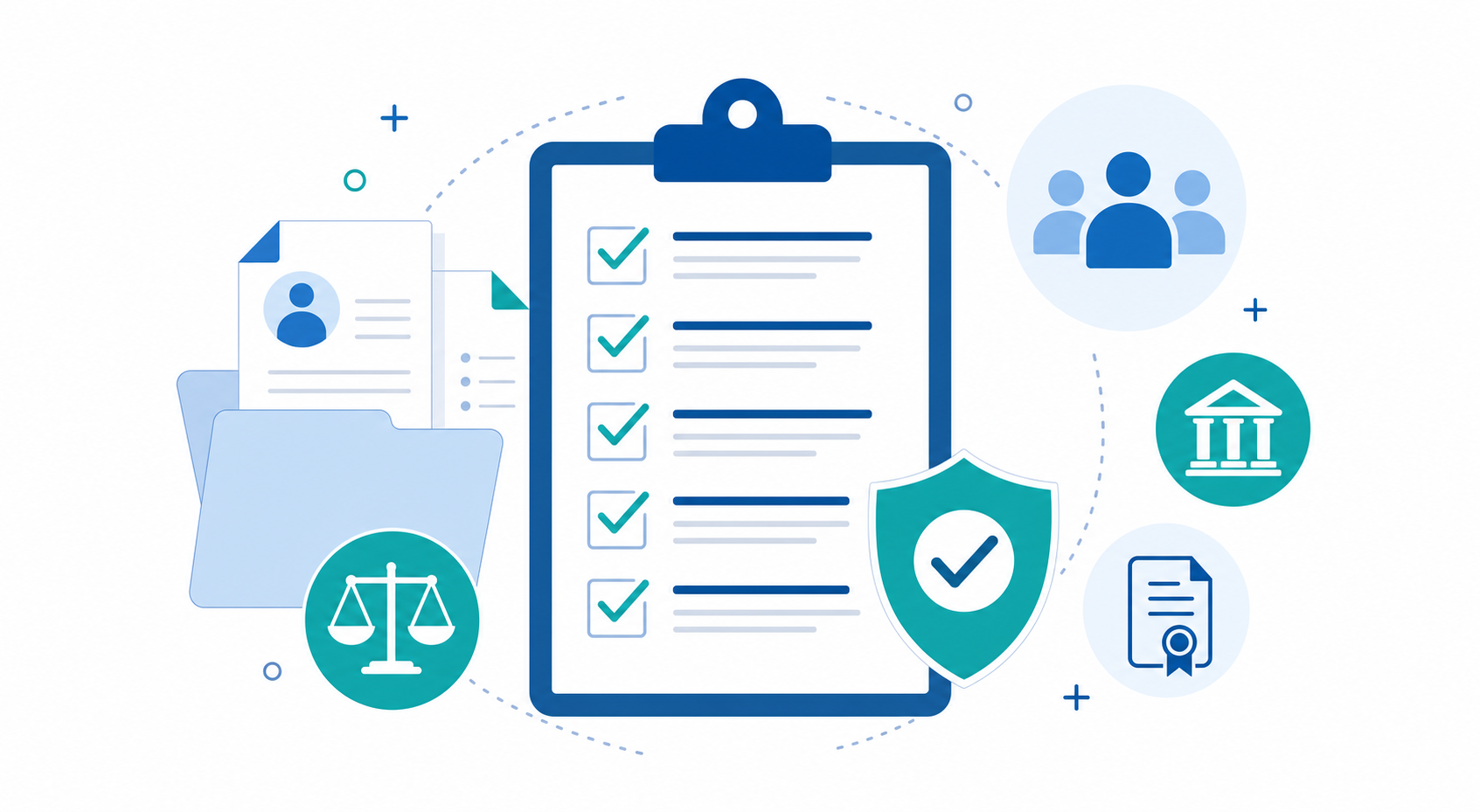
Most employee handbooks include company information, employment policies, pay and benefits information, attendance rules, leave and accommodation policies, standards of conduct, safety information, and an employee acknowledgment.
Your checklist may include:
- An introduction and company overview
- Equal employment opportunity and workplace policies
- Compensation, timekeeping, and benefits information
- Work schedules and attendance expectations
- Leave and workplace accommodation policies
- Pregnancy and lactation accommodation information
- A code of conduct
- Performance and employee development information
- Health, safety, and security policies
- Remote or hybrid work policies, when applicable
- An employee acknowledgment
The exact policies your company needs will depend on its size, industry, workforce, locations, and applicable federal, state, and local laws. A template can provide a starting point, but it should be customized before use.
What Is an Employee Handbook?
An employee handbook is a document that explains an organization's workplace policies, procedures, and expectations.
It gives new and current employees a central place to find information about how the organization works and what is expected of them. It may answer common questions about attendance, leave, workplace behavior, benefits, safety, and where employees can go for help.
For employers, a clear handbook can support onboarding and help managers communicate policies more consistently. For employees, it offers a dependable reference when questions arise.
A handbook should reflect how your organization actually operates. Policies copied from another company's handbook may not fit your workforce, practices, benefits, or legal requirements.
Why Does an Employee Handbook Matter?
An employee handbook creates a shared reference point for employees and managers.
Without one, employees may have to rely on verbal instructions, old emails, or information passed from one person to another. This can make expectations harder to understand and policies more difficult to apply consistently.
A useful handbook can:
- Explain workplace expectations
- Give employees a central policy resource
- Support the employee onboarding process
- Help managers apply company policies consistently
- Explain where employees can ask questions or report concerns
- Document important company practices
- Introduce employees to the company’s culture and values
A handbook does not replace HR guidance or legal advice. It is a communication tool that should be customized to the organization.
What Should an Employee Handbook Include?
A successful employee handbook should reflect your organization’s workforce, culture, policies, and daily operations.
No two companies are exactly alike, so no two employee handbooks should be identical. Still, most effective handbooks cover several common areas.
1. Introduction and Company Overview
Begin your employee handbook with a warm welcome message from the company's leadership team. This sets a positive tone and demonstrates the organization's commitment to its employees. Follow this with an overview of the company's history, mission, vision, and values. This section helps employees understand the bigger picture and how their roles contribute to the overall success of the organization.
Example: "Welcome to Lift HCM! We are thrilled to have you as a part of our team. At Lift HCM, we are dedicated to providing innovative solutions to our clients while fostering a collaborative and inclusive work environment. Our mission is to..."
2. Employment Policies
In this section, outline the company's employment policies, including equal opportunity, anti-discrimination, and anti-harassment policies. Clearly state that the organization does not tolerate any form of discrimination or harassment based on race, color, religion, gender, sexual orientation, age, disability, or any other protected characteristic. Provide examples of unacceptable behavior and the consequences of violating these policies.
Example: "Lift HCM is an equal opportunity employer. We do not tolerate discrimination or harassment based on race, color, religion, gender, sexual orientation, age, disability, or any other protected characteristic. Examples of unacceptable behavior include..."
Reference: U.S. Equal Employment Opportunity Commission Prohibited employment policies/practices
3. Compensation and Benefits
Provide an overview of the company's compensation structure, including pay periods, overtime policies, and any performance-based bonuses or incentives. Clearly explain the benefits package, including health insurance, retirement plans, paid time off, and any other perks or benefits offered by the organization.
Example: "Lift HCM offers a competitive compensation package, which includes a base salary, performance-based bonuses, and a comprehensive benefits package. Our benefits include..."
Reference: Society for Human Resource Management
4. Work Schedule and Attendance
Clearly outline the company's work schedule, including regular business hours, flexible work arrangements (if applicable), and attendance expectations. Explain the procedure for reporting absences, requesting time off, and the consequences of excessive absenteeism or tardiness.
Example: "Lift HCM's regular business hours are from 9:00 AM to 5:00 PM, Monday through Friday. We offer flexible work arrangements, such as telecommuting and flexible hours, on a case-by-case basis. If you need to be absent from work..."
Reference: U.S. Department of Labor Work hours
5. Code of Conduct and Professional Behavior
Establish clear expectations for professional behavior and conduct in the workplace. This section should cover topics such as dress code, communication guidelines, social media use, and conflict resolution. Provide examples of acceptable and unacceptable behavior to help employees understand the company's expectations.
Example: "At Lift HCM, we expect all employees to maintain a high level of professionalism and adhere to our code of conduct. This includes dressing appropriately for the workplace, communicating respectfully with colleagues and clients, and using social media responsibly..."
Reference: The importance of a code of conduct in the workplace: Ethics & Compliance Initiative
6. Performance Management and Employee Development
Explain the company's performance management process, including performance reviews, goal-setting, and feedback mechanisms. Highlight the organization's commitment to employee development and provide information on training opportunities, mentoring programs, and career advancement paths.
Example: "Lift HCM is committed to the growth and development of our employees. We conduct annual performance reviews to provide feedback, set goals, and identify areas for improvement. We also offer various training programs and mentoring opportunities to support your professional growth..."
Reference: Performance Management Handbook-A Guide for Managers/Supervisors and Employees U.S. Department of the Interior
7. Health, Safety, and Security
Outline the company's policies and procedures related to workplace safety, emergency preparedness, and security protocols to prioritize the health, safety, and security of your employees. Provide information on reporting accidents, injuries, or unsafe conditions and emphasize the importance of maintaining a secure work environment.
Example: "At Lift HCM, the health, safety, and security of our employees are of utmost importance. We have established the following policies and procedures to ensure a safe and secure work environment..."
Reference: Occupational Safety and Health Administration Employer responsibilities
8. Leave and Workplace Accommodations
Leave and accommodation information should have its own section instead of being buried inside the attendance policy.
This section may need to cover company-provided leave as well as applicable federal, state, and local protections. Topics can include:
- Vacation or paid time off
- Sick leave
- Family and medical leave
- Military leave
- Jury-duty leave
- Bereavement leave
- Disability accommodations
- Religious accommodations
- Pregnancy-related accommodations
- The process for requesting leave or an accommodation
Under the Family and Medical Leave Act, eligible employees of covered employers may receive unpaid, job-protected leave for specified qualifying reasons. Employer coverage, employee eligibility, and other conditions apply.
Reference: U.S. Department of Labor, Family and Medical Leave Act
Employers with employees in multiple states should also review the requirements of every jurisdiction in which employees work. State or local rules may provide protections beyond federal requirements.
9. Pregnancy and Lactation Accommodations
A current handbook review should address pregnancy-related accommodations and lactation protections when those requirements apply.
The Pregnant Workers Fairness Act requires covered employers to provide reasonable accommodations for known limitations related to pregnancy, childbirth, or related medical conditions unless the accommodation would cause an undue hardship.
Reference: U.S. Equal Employment Opportunity Commission, Pregnant Workers Fairness Act
Federal law also provides pumping-at-work protections for covered employees. The U.S. Department of Labor provides guidance on reasonable break time and appropriate space for employees to express breast milk at work.
Reference: U.S. Department of Labor, Pump at Work
Because federal, state, and local requirements may overlap, employers should make sure the handbook reflects the rules that apply to their workforce and locations.
10. Conclusion and Acknowledgement
Conclude your employee handbook by reiterating the importance of adhering to the company's policies and procedures. Encourage employees to reach out to their supervisors or the HR department if they have any questions or concerns. Include an acknowledgment form for employees to sign, confirming that they have read, understood, and agree to abide by the handbook's contents.
Example: "We hope this employee handbook serves as a valuable resource throughout your employment with Lift HCM. If you have any questions or concerns, please don't hesitate to reach out to your supervisor or the HR department. Please sign the acknowledgment form below to confirm that you have read, understood, and agree to abide by the policies and procedures outlined in this handbook."
What Should Be Avoided in an Employee Handbook?
While it’s essential to include comprehensive information in your employee handbook, there are certain pitfalls to avoid:
Overly Restrictive Language: Avoid language that could be interpreted as overly restrictive or binding. For example, using the word "guarantee" or "promise" when referring to employment terms can create unintended legal obligations.
Inconsistent Information: Ensure that all policies in the handbook are consistent with other company documents and practices. Inconsistencies can lead to confusion and potential legal issues.
Outdated Policies: Regularly review and update the handbook to ensure it reflects current laws, regulations, and company practices. An outdated handbook can be misleading and expose the company to legal risks.
Lack of Flexibility: Avoid including rigid policies that don't allow flexibility. For instance, a policy that does not allow exceptions or managerial discretion can lead to employee dissatisfaction or legal challenges.
Do Businesses Have to Have an Employee Handbook?
There is no single federal rule stating that every U.S. business must publish an employee handbook. However, employers may have specific policy, notice, posting, or communication obligations.
The requirements that apply can depend on the company’s size, industry, workforce, benefits, and locations. For example, covered employers have employee-notice responsibilities under the Family and Medical Leave Act.
This distinction matters. “Does my business need a handbook?” and “What employment information is my business required to provide?” are not the same question.
Employers should review the requirements that apply in every jurisdiction where employees work. A qualified employment attorney can help identify obligations that may not be satisfied through a handbook alone.
How Often Should You Update an Employee Handbook?
Review your employee handbook on a regular schedule and whenever a material change affects your workforce or policies.
A review may be needed when there are changes to:
- Applicable employment laws or regulations
- States or local jurisdictions where employees work
- Employee benefits
- Payroll or timekeeping practices
- Leave or accommodation practices
- Remote or hybrid work arrangements
- Company policies
- Reporting procedures
Assign an internal owner for the handbook. That person should coordinate reviews, track versions, confirm approvals, and make sure employees receive important updates.
What Are the Best Practices for Creating an Employee Handbook?
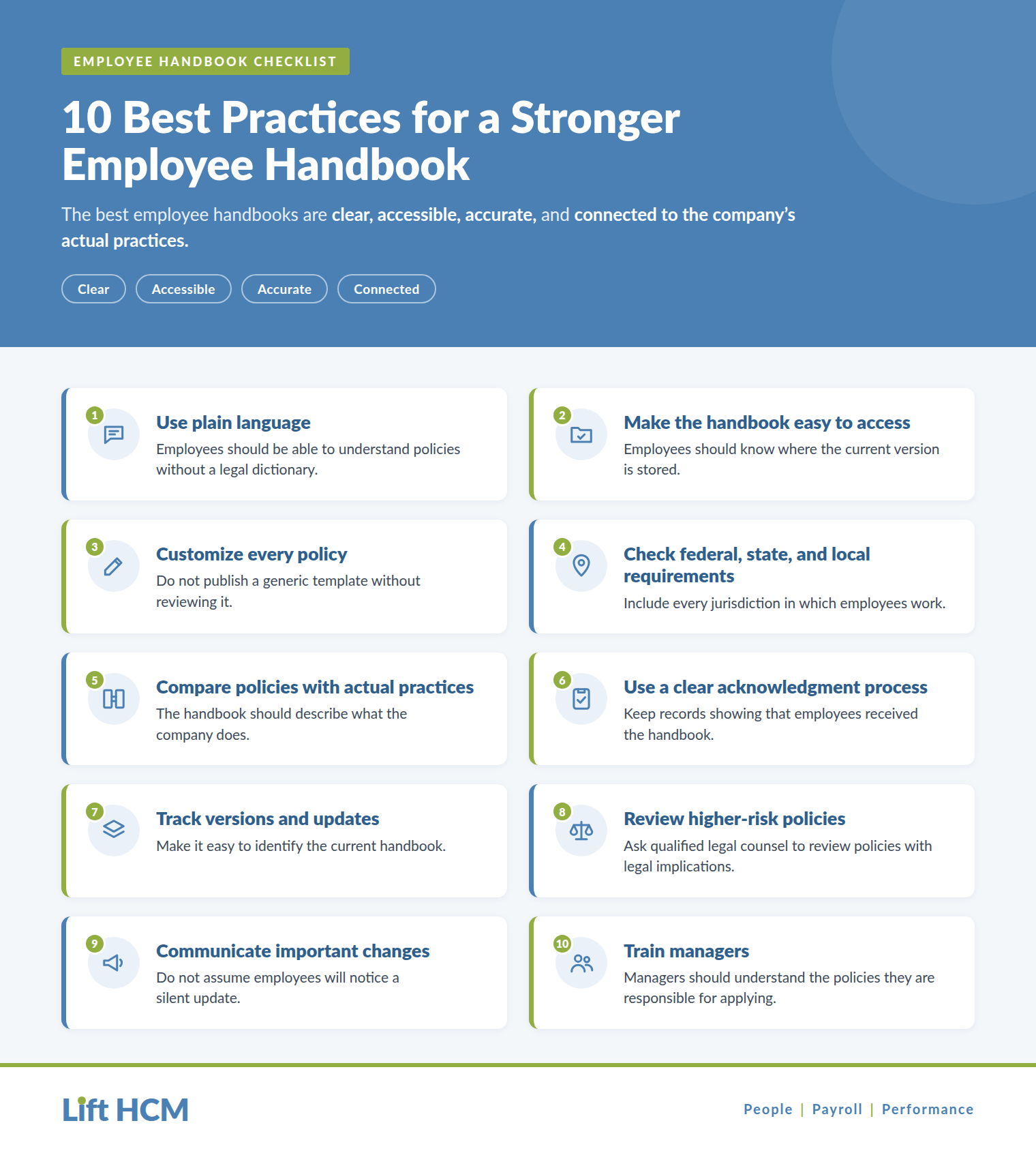
The best employee handbooks are clear, accessible, accurate, and connected to the company’s actual practices.
- Use plain language. Employees should be able to understand policies without a legal dictionary.
- Make the handbook easy to access. Employees should know where the current version is stored.
- Customize every policy. Do not publish a generic template without reviewing it.
- Check federal, state, and local requirements. Include every jurisdiction in which employees work.
- Compare policies with actual practices. The handbook should describe what the company does.
- Use a clear acknowledgment process. Keep records showing that employees received the handbook.
- Track versions and updates. Make it easy to identify the current handbook.
- Review higher-risk policies. Ask qualified legal counsel to review policies with legal implications.
- Communicate important changes. Do not assume employees will notice a silent update.
- Train managers. Managers should understand the policies they are responsible for applying.
Employee Handbook FAQs
What are the most important parts of an employee handbook?
The most important sections usually cover employment policies, pay and timekeeping, attendance, leave and accommodations, workplace conduct, safety, benefits information, and an employee acknowledgment. The exact content depends on the employer and the jurisdictions in which employees work.
Can I use an employee handbook template?
Yes. A handbook template can save time and help you identify common topics. However, it should be treated as a starting point and customized to your company’s policies, workforce, benefits, locations, and legal requirements.
Should an employee handbook include remote work policies?
Yes, if remote or hybrid work is part of your workplace. A clear policy can address eligibility, schedules, availability, timekeeping, equipment, information security, communication, safety, and expense practices.
Should employees sign an employee handbook?
Many employers use an acknowledgment to document that employees received the handbook and know where to find company policies. The acknowledgment language should reflect the employer’s circumstances and applicable requirements.
Is an employee handbook the same as an employment contract?
An employee handbook is not automatically an employment contract. However, handbook wording can have legal implications. Employers should avoid unintended promises and have disclaimer and acknowledgment language reviewed for their circumstances.
Should a small business have an employee handbook?
A handbook can help a small business communicate policies and expectations consistently. The content should match the size and needs of the organization rather than copying a longer handbook designed for a large employer.
Who should review an employee handbook?
HR, company leadership, payroll or benefits specialists, and other policy owners may need to participate in the review. Qualified employment counsel can review legal language and requirements that apply to the employer’s workforce and locations.
Build an Employee Handbook Your Employees Can Use
Creating an effective employee handbook requires careful consideration of your organization's unique needs, culture, and values. By including the essential elements discussed in this blog post, along with clear examples and references, you can develop a comprehensive resource that guides employees and promotes a positive, productive work environment.
Remember to review and update your employee handbook regularly to ensure that it remains current and aligned with any changes in laws, regulations, or company policies. By investing time and effort into crafting a well-structured and informative employee handbook, you can set your employees up for success and foster a strong, engaged workforce.

Please note that this article does not cover all possible scenarios, and any discussions or viewpoints should not be considered legal advice. Readers are advised to consult with legal professionals for specific legal guidance.
If you are not ready to speak with a Lift HCM team member, these resources may also help: