
.png?width=473&height=315&name=Digital%20Employee%20Experience%20DEX%20in%20HCM-21%20(1).png)
Are you an HR leader or business owner struggling to understand why productivity and engagement are stalling, even though you’ve invested heavily in new technology? You look at your hybrid workforce and see frustration—not because the team is lazy, but because they’re fighting clunky, disconnected systems just to do basic tasks like requesting time off or viewing a pay stub. It feels like your technology is slowing your people down, not speeding them up. In fact, poor digital experiences are estimated to cost organizations an average loss of 32 days of productivity per employee each year.
We see this problem every day. At Lift HCM, we understand that in the 2026 workplace, the technology your team uses is their workplace. When that digital environment is fragmented, morale suffers, and that friction quickly translates to retention issues and measurable financial losses.
Fortunately, there is a clear solution. In this essential guide, you will learn exactly what Digital Employee Experience (DEX) means in the context of Human Capital Management (HCM), why it has become the single most critical business metric for retention, and how high-performing organizations are using AI-driven strategies to solve this friction. You will walk away with clear definitions, actionable technology strategies, and a defined roadmap to transform your digital workplace.
Table of Contents
- What Digital Employee Experience Means in 2026
- Why Digital Employee Experience (DEX) is Critical for HCM After 2025
- The Business Case for DEX in HCM
- Core Elements of a Strong Digital Employee Experience
- How To Build an Effective Digital Employee Experience Strategy
- Future Trends Shaping Digital Employee Experience in 2026 and Beyond
- How HCM Leaders Evaluate Digital Employee Experience Platforms in 2026
- Frequently Asked Questions About Digital Employee Experience
- Your Next Step: Making DEX the HCM Differentiator in 2026
What Digital Employee Experience Means in 2026
To fix a problem, you first have to define it. The term "digital employee experience" has evolved rapidly over the last few years, moving from a niche IT concept to a core HR mandate.
Digital employee experience refers to the sum of every digital interaction an employee has with your organization throughout their lifecycle. It is not just about having a modern laptop; it encompasses the quality, ease, and reliability of the software and platforms employees use daily. Despite growing IT budgets, only 13% of employees report being highly satisfied with their technology experience, underscoring the gap between investment and actual usability.
This includes:
- Onboarding portals: The first digital impression a new hire gets.
- HRIS/HCM tools: Where they check pay stubs, request time off, or view benefits.
- Communication apps: Tools like Slack, Teams, or Zoom.
- Learning platforms: Where professional development happens.
It is important to distinguish DEX from general Employee Experience (EX). While EX covers the cultural and physical environment, DEX focuses specifically on the technology layer. However, in a remote or hybrid world, DEX often is the EX. It combines functional elements (does the software work?) with emotional elements (does this tool make me feel empowered or frustrated?).
Why Digital Employee Experience (DEX) is Critical for HCM After 2025
The workplace landscape has shifted permanently. According to recent reports from industry leaders like AIHR and Ivanti, the correlation between technology satisfaction and employee retention is undeniable. Studies show that 87% of employees say technology experience influences their decision to stay with or leave an employer.
As we move through 2026, hybrid work is no longer an "experiment"—it is the standard. For many employees, the screen is their only connection to company culture. When that screen delivers a poor experience—constant crashes, lost passwords, or confusing interfaces—employees disengage.
Poor tech experiences lead to:
- Cognitive overload: Employees waste energy fighting the system rather than doing their jobs.
- Higher turnover: Top talent will leave for competitors who offer better, smoother tools. Given that the cost to replace a single employee can be six to nine months of their salary, this represents an enormous financial risk.
- Productivity loss: Hours are lost weekly to inefficient digital workflows.
The Business Case for DEX in HCM
For business owners and payroll leaders, DEX is not just about "feelings"; it is a financial metric. A unified digital experience directly impacts the bottom line by driving efficiency, ensuring compliance, and improving accuracy. In fact, companies that prioritize a strong employee experience—which is increasingly digital—see up to four times higher profit per employee.
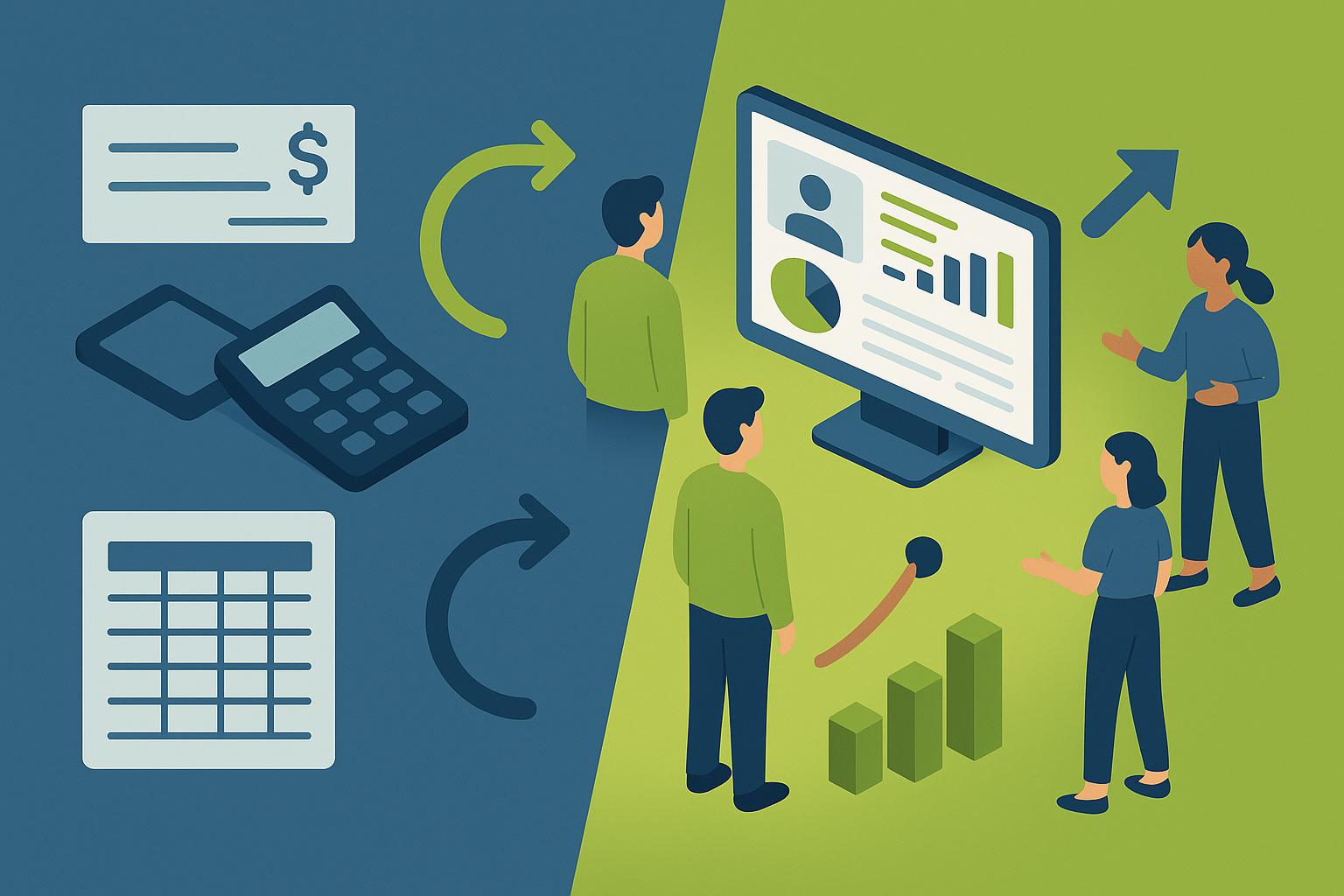
For mid-size and growing organizations, the cost of inaction is high. If an employee has to log into three different systems just to update their address or check a pay stub, you are paying for that wasted time. Unified HCM platforms eliminate this friction.
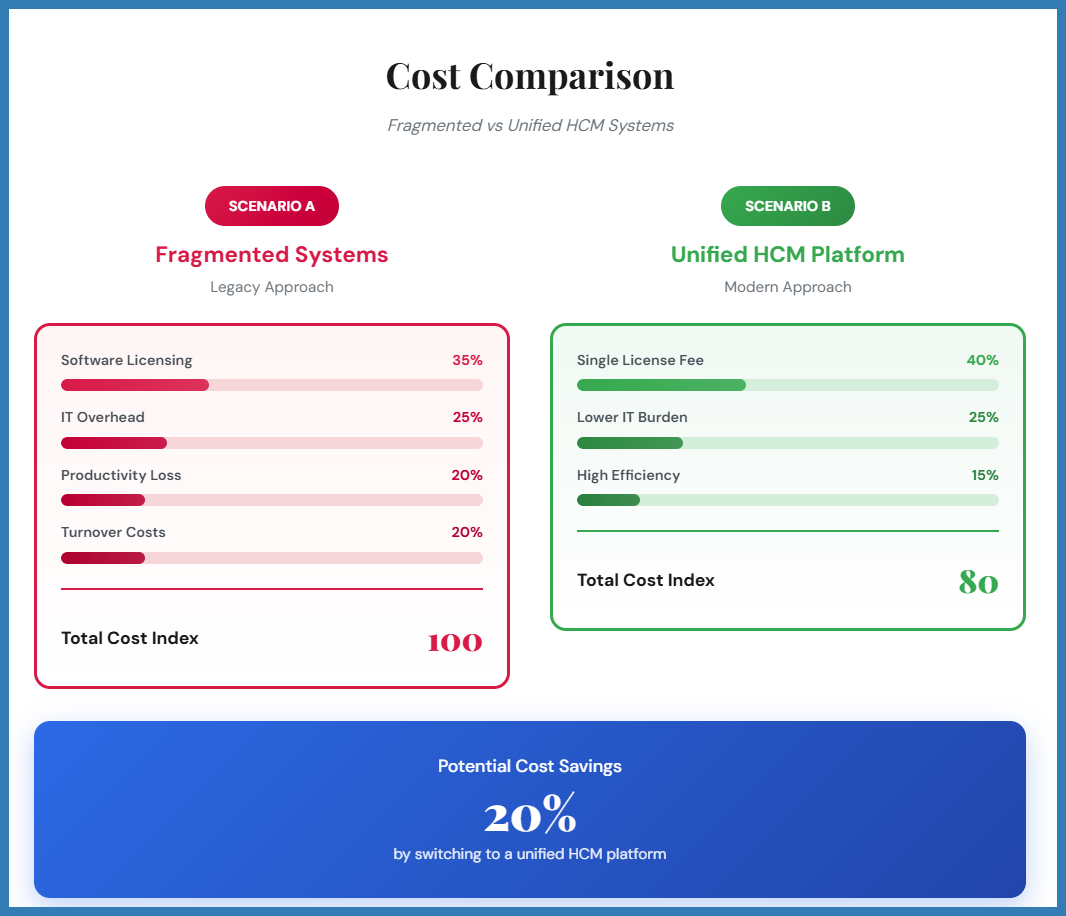
By consolidating disparate tools into one seamless ecosystem, businesses often see immediate improvements in administrative efficiency and a reduction in payroll errors, which protects the company from costly compliance fines.
Companies with strong DEX see 20-25% higher employee engagement scores and can reduce HR administrative tasks by up to 40%. For a 100-employee company, the annual value of implementing a unified DEX strategy typically exceeds $117,000 when you account for:
- Time savings
- Error reduction
- Productivity gains
- Retention impact
Core Elements of a Strong Digital Employee Experience
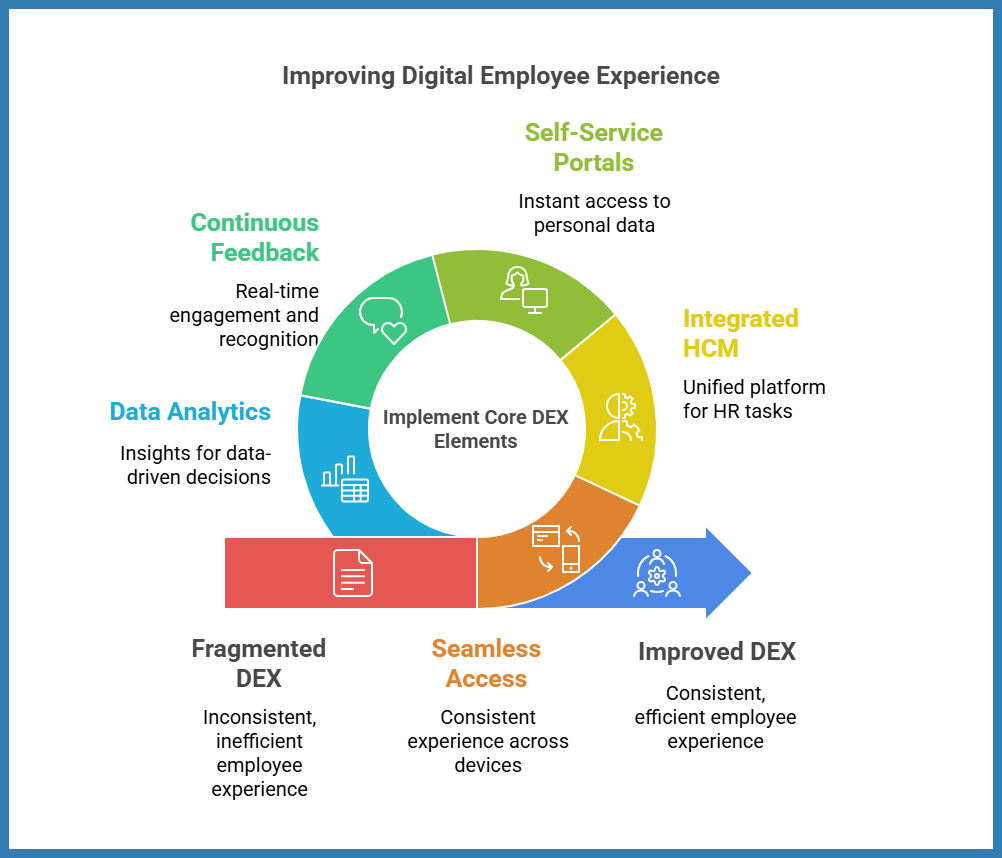
Improving your organization's DEX requires looking at specific pillars of technology interaction. Search trends suggest leaders are actively asking, "How to improve digital employee experience," and the answer lies in these four core elements.
Seamless Access Across Devices and Environments
In 2026, the desktop computer is just one of many access points. A strong DEX strategy requires a mobile-first mindset—whether your employees are in the office, working from a home office, or out in the field, their experience must be consistent.
Key requirements include:
- Single Sign-On (SSO): Eliminating password fatigue by allowing one secure login for all apps.
- Intuitive Navigation: Interfaces that require zero training to understand.
- Accessibility: Ensuring all digital tools meet inclusivity standards for visually or hearing-impaired employees.
💡 Pro Tip: When evaluating HCM platforms, test them on a mobile device first. If the mobile experience feels clunky, your field employees and remote workers will struggle daily.
Integrated HCM Platforms
The era of "best-of-breed" point solutions that don't talk to each other is ending. The most effective DEX creates a single ecosystem where communication, payroll, HR, scheduling, learning, and performance management live together.
When tools are fragmented, employees suffer from "login fatigue" and data gets lost in the shuffle. Integrated employee experience platforms ensure secure data flow and provide HR and payroll teams with real-time visibility. When the system is unified, an address change in the payroll module automatically updates the benefits module, saving time and reducing errors.
Self-Service That Reduces Friction
Employees today expect the same convenience at work that they get in their personal lives. If they can track a pizza delivery in real-time, they should be able to view their vacation accrual or download a W-2 instantly without emailing HR.
Self-service portals improve accuracy because the data comes directly from the source—the employee. They also free up HR teams to focus on strategy rather than administration. Modern platforms are even incorporating AI-powered chatbots to answer routine policy questions instantly, 24/7.
Continuous Feedback and Recognition
Engagement isn't a once-a-year activity. A digital environment must facilitate real-time feedback loops. This helps employees feel heard, which is critical for psychological safety in digital-first teams.
Effective DEX incorporates tools for:
- Pulse Surveys: Short, frequent check-ins on sentiment.
- Peer Recognition: Digital "high-fives" that are visible to the whole team.
- Team Communication: Spaces for non-work social interaction to build belonging.
Data and Analytics for Leaders
Finally, a strong digital experience provides value back to the leadership team through analytics. Advanced platforms can pinpoint bottlenecks in adoption.
For example, analytics can reveal if new hires are dropping off at a specific point in the digital onboarding process, or if a specific training module has low engagement. This allows HR leaders to make data-driven decisions rather than guessing where the friction lies.
How To Build an Effective Digital Employee Experience Strategy
Creating a great experience doesn't happen by accident. It requires a deliberate strategy. Here is how high-performing organizations are building their DEX roadmaps.
Start With Employee Feedback and Journey Mapping
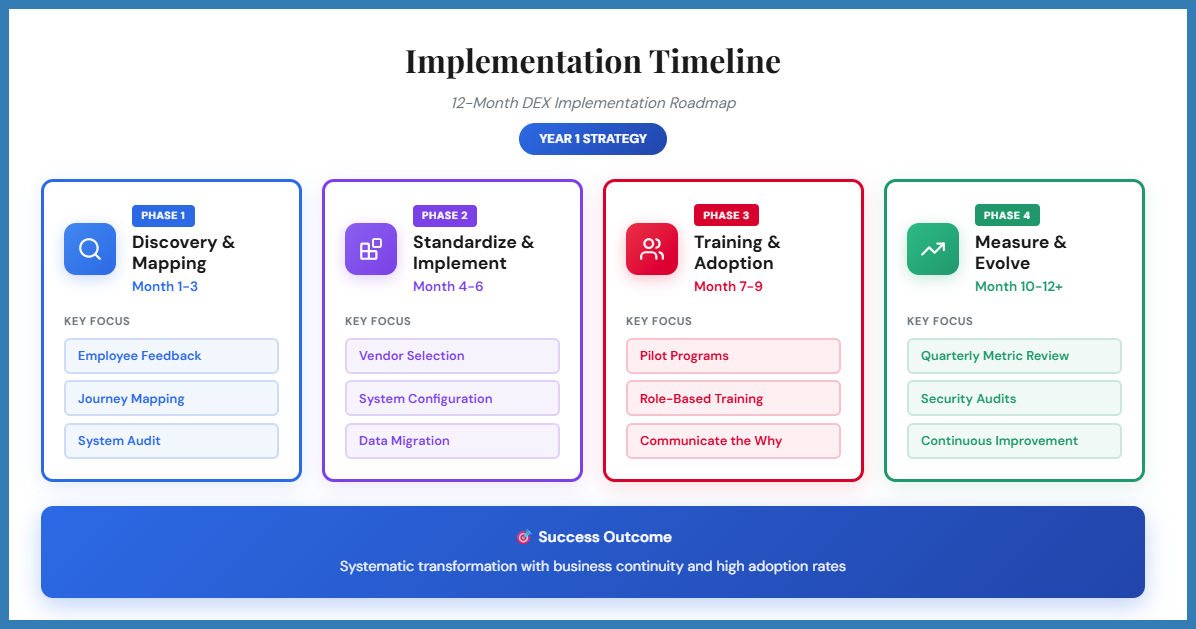
Before you buy new software, ask your people what is broken. Survey your employees specifically about their tech frustrations. Where do they get stuck? Which tasks take longer than they should?
💡 Pro Tip: When surveying employees about tech frustrations, ask them to rate each tool on a simple 1-10 scale. Tools scoring below 6 should be your top priority for replacement or improvement.
Once you have this data, engage in journey mapping. Map out the digital experience from the moment a candidate applies (pre-hire) to the day they leave (offboarding). Identify the "friction points"—the moments where the process creates anxiety or delay—and prioritize fixing those first.
Standardize Your Digital Ecosystem
Conduct a technology audit. Many organizations are paying for duplicate tools (e.g., three different project management apps used by different teams). This creates confusion and silos.
When evaluating HCM platforms, look for unification. Can the platform handle the entire employee lifecycle? Does it integrate well with the few specialized tools you absolutely need to keep? Standardization reduces IT overhead and simplifies the learning curve for employees.
Invest in Training and Change Management
The best software in the world will fail if no one knows how to use it. Technology success depends entirely on human adoption.
To ensure success:
- Run Pilot Programs: Test new tools with a small group of "champions" first.
- Communicate the "Why": Don't just tell employees how to use a tool; explain how it makes their life easier.
- Role-Based Training: Customize training so managers see manager-specific features, while individual contributors see what matters to them.
Measure Results and Evolve Frequently
DEX is not a "set it and forget it" project. You must define key metrics to track success, such as task completion time, login frequency, support ticket volume, and onboarding completion rates.
Review these metrics quarterly. If support tickets spike after a software update, you know you need to intervene with more training or a configuration fix.
Prioritize Security and Compliance
A smooth experience cannot come at the cost of security. This is especially true for payroll and HCM, where sensitive personal and financial data is stored.
Your strategy must include robust security measures like Multi-Factor Authentication (MFA), role-based permissions, and comprehensive audit trails. Secure systems actually improve the employee experience by building trust—employees need to know their banking info and social security numbers are safe.
Future Trends Shaping Digital Employee Experience in 2026 and Beyond
As we look toward the future, DEX is being reshaped by artificial intelligence and shifting workforce demographics.
AI-Powered Personalization: In 2026, one-size-fits-all is obsolete. AI is driving hyper-personalization within HCM platforms—serving up learning paths tailored to each employee’s goals, recommending benefits based on life events, and even predicting engagement risk so managers can spot potential burnout early and intervene.
Real-Time Feedback and Sentiment Monitoring: We are replacing annual engagement surveys with continuous listening tools that capture micro-feedback and flag friction—like a frustrating workflow—so HR can act sooner.
Hyper-Accessible, Global-Ready Workplaces: As teams become more distributed and global, DEX must serve everyone, with multilingual interfaces that adapt to user location and inclusive design that keeps tools usable for employees of all abilities.
Automation Across HR and Payroll: Automation is the silent hero of DEX, handling onboarding workflows, payroll checks, and Tier 1 support so HR can focus on people.
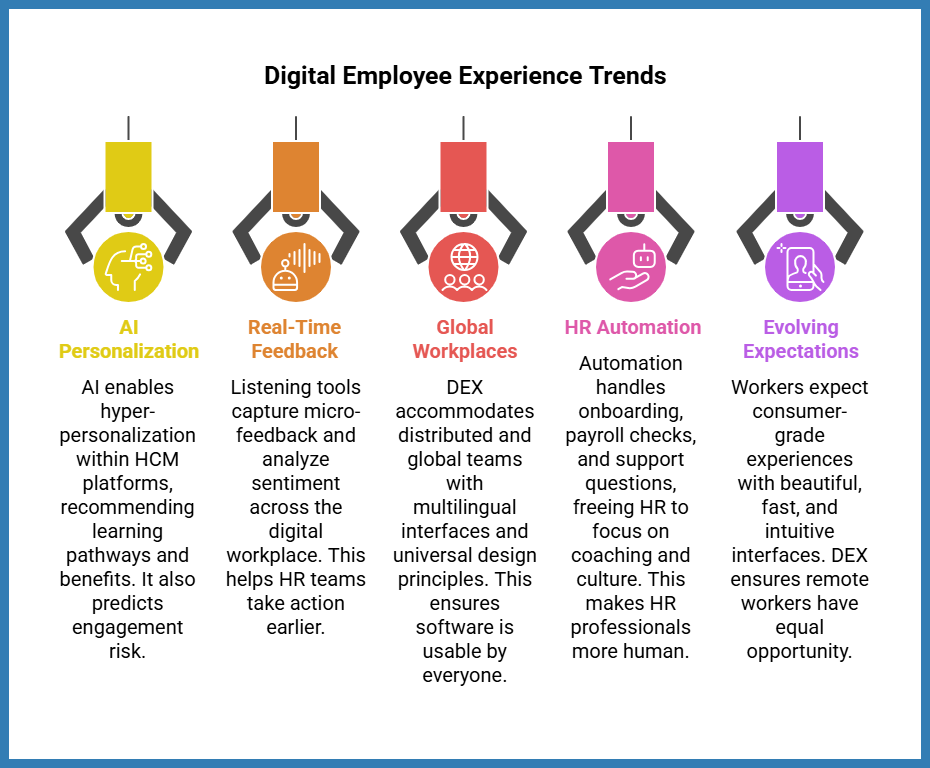
Evolving Employee Expectations: Workers now expect "consumer-grade" HR tools—fast, intuitive, and visually clean, like Amazon or Netflix. Strong DEX also advances DEI by giving remote and in-office employees equal access to information and opportunity.
How HCM Leaders Evaluate Digital Employee Experience Platforms in 2026
If you are in the market for new technology, the options can be overwhelming. Here is how savvy buyers are evaluating platforms.
Key Decision Criteria
Focus on outcomes, not just features.
- Usability: Is it intuitive enough for a non-tech-savvy employee?
- Scalability: Will it grow with you from 50 to 500 employees?
- Integrations: Does it play nicely with your accounting or ERP software?
- Support: Will the vendor be a partner, or just a software provider?
Questions to Ask Vendors
Don't be afraid to grill potential vendors. Ask them:
- "How does your platform unify communication, learning, and payroll into one view?"
- "How do you support adoption and change management during implementation?"
- "What specific AI features are included to support personalization and efficiency?"
- "How do you handle accessibility requirements for diverse workforces?"
Mistakes to Avoid
The biggest mistake is buying tools that don't integrate, creating "data islands." Another common pitfall is underestimating the need for training—assuming that because a tool is "modern," people will automatically use it. Finally, avoid focusing strictly on features; focus on the business outcomes those features drive.
Frequently Asked Questions About Digital Employee Experience
Q: What is the difference between digital employee experience (DEX) and employee experience (EX)? A: Employee experience (EX) encompasses everything about working at your organization—culture, physical workspace, management style, and benefits. Digital employee experience (DEX) specifically focuses on the technology layer—the software, apps, and digital tools employees interact with daily. In today's hybrid and remote workplace, DEX often defines the entire EX since the screen is many employees' only connection to company culture.
Q: How much does it cost to improve digital employee experience? A: The investment varies significantly based on your organization's size and current technology stack. For mid-sized companies (50-500 employees), implementing a unified HCM platform typically ranges from $15,000 to $75,000 annually, including software licensing, implementation, and training. However, the cost of not improving DEX is often higher—productivity losses from inefficient systems, compliance fines from errors, and turnover costs from disengaged employees can exceed six figures annually.
Q: What are the biggest mistakes companies make with digital employee experience? A: The three most common mistakes are: (1) buying "best-of-breed" point solutions that don't integrate, creating data silos and login fatigue, (2) underestimating the importance of change management and training—assuming employees will automatically adopt new technology, and (3) focusing on features instead of outcomes, buying impressive-sounding tools that don't actually solve the business problems causing friction for your team.
Q: How do you measure digital employee experience? A: Effective DEX measurement combines quantitative and qualitative metrics. Track task completion time (how long it takes to complete common workflows), login frequency (indicating adoption), support ticket volume (showing friction points), and onboarding completion rates. Pair these with regular pulse surveys asking employees specifically about their tech frustrations, and use sentiment monitoring tools to capture real-time feedback across your digital workplace.
Q: Can small businesses afford to invest in digital employee experience? A: Absolutely. Many modern HCM platforms offer scalable pricing designed for growing businesses. Starting with 25-50 employees, you can implement unified platforms that cost less than maintaining multiple disconnected systems. The ROI comes quickly—reducing administrative time, eliminating payroll errors, and improving retention by even 5-10% typically pays for the investment within the first year. The question isn't whether you can afford to invest in DEX; it's whether you can afford not to.
Your Next Step: Making DEX the HCM Differentiator in 2026
You don't have to guess your way through digital transformation or struggle with disjointed systems that frustrate your team. The digital friction that slows down your business is solvable.
As we move through 2026, digital employee experience is the differentiator between companies that retain top talent and those that struggle with turnover. Thoughtful technology, accessible design, and AI-driven insights are the keys to strengthening engagement and protecting your bottom line.
At Lift HCM, we have helped organizations across industries transition their payroll and human capital management with confidence. We provide the unified, intuitive, and secure platforms that modern businesses need to thrive.
Explore Our Services ➝